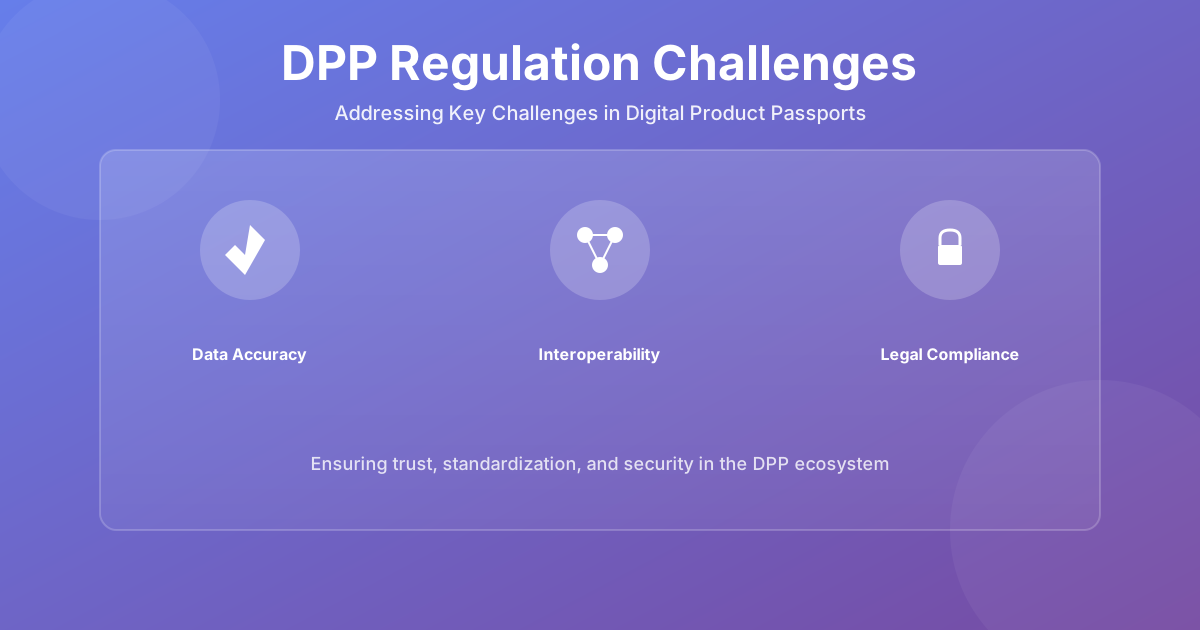
1. Enhancing Data Accuracy & Trust
Focus on mitigating the risk of upstream fraud and ensuring the veracity of information at the point of origin.
Mandatory Third-Party Verification: Require validation by accredited, independent auditors for high-risk data (e.g., recycled content, carbon footprint).
Verifiable Digital Evidence: Mandate the upload of digitally secured, non-tamperable evidence like lab reports and sensor data logs, moving beyond simple self-declarations.
Liability Downstream Incentives: Establish contractual and financial liability for upstream suppliers regarding verified data inaccuracies, promoting accountability.
2. Solving Interoperability & Data Gaps
Addressing the technical challenges of continuous, standardized data exchange across complex, global supply chains.
Harmonized, Open Standards: Strictly enforce the use of open, global standards (e.g., ISO) to define the exact format and semantic meaning of all mandatory data points.
Mandatory Interoperability Protocols: Require enterprise IT systems (ERP, PLM) to be compatible with defined APIs to force standardized digital communication between actors.
Public Digital Infrastructure: Invest in shared, easy-to-use middleware and tools, especially for SMEs, to lower the barrier to entry for digital compliance.
3. Mitigating Legal Risks (IP & GDPR)
Establishing a secure governance framework to protect sensitive commercial and personal data within the system.
Granular, Permission-Based Access: Implement a system where data is compartmentalized, ensuring stakeholders (Consumers, Regulators, Repairers) only see information relevant to their legal need-to-know.
Zero-Trust Security Model: All data, particularly trade secrets, must be protected by state-of-the-art encryption and strict authentication controls to prevent unauthorized access.
Clear GDPR Mandates: Explicitly clarify necessary personal data fields and mandate the immediate, secure anonymization or pseudonymization of all other personal data.
Modern digital compliance solutions are designed to natively implement these best-practice corrections, turning regulatory challenges into a competitive advantage for businesses.