The Ecodesign for Sustainable Products Regulation (ESPR) entered into force in 2024. It replaces and broadens previous ecodesign rules and will introduce new product information requirements through delegated acts for specific product groups. A central tool is the Digital Product Passport (DPP).
This guide explains the role of DPPs under ESPR, clarifies what is already defined versus what will be specified by delegated acts, and outlines pragmatic steps manufacturers can take now without overcommitting to assumptions.
What is ESPR?
ESPR is an EU regulation aimed at improving product sustainability and transparency throughout the lifecycle. It provides a framework; concrete requirements for each product group will arrive via delegated acts adopted over time.
ESPR objectives include:
- Improving environmental performance over the full lifecycle
- Supporting circularity (durability, repair, reuse, refurbishment, recycling)
- Increasing transparency for market surveillance and end users
- Providing data needed for sustainability reporting and policy objectives
Priority product groups are addressed first, with more categories added in phases. Exact obligations and timelines depend on the delegated act for your product group.
What is a Digital Product Passport (DPP)?
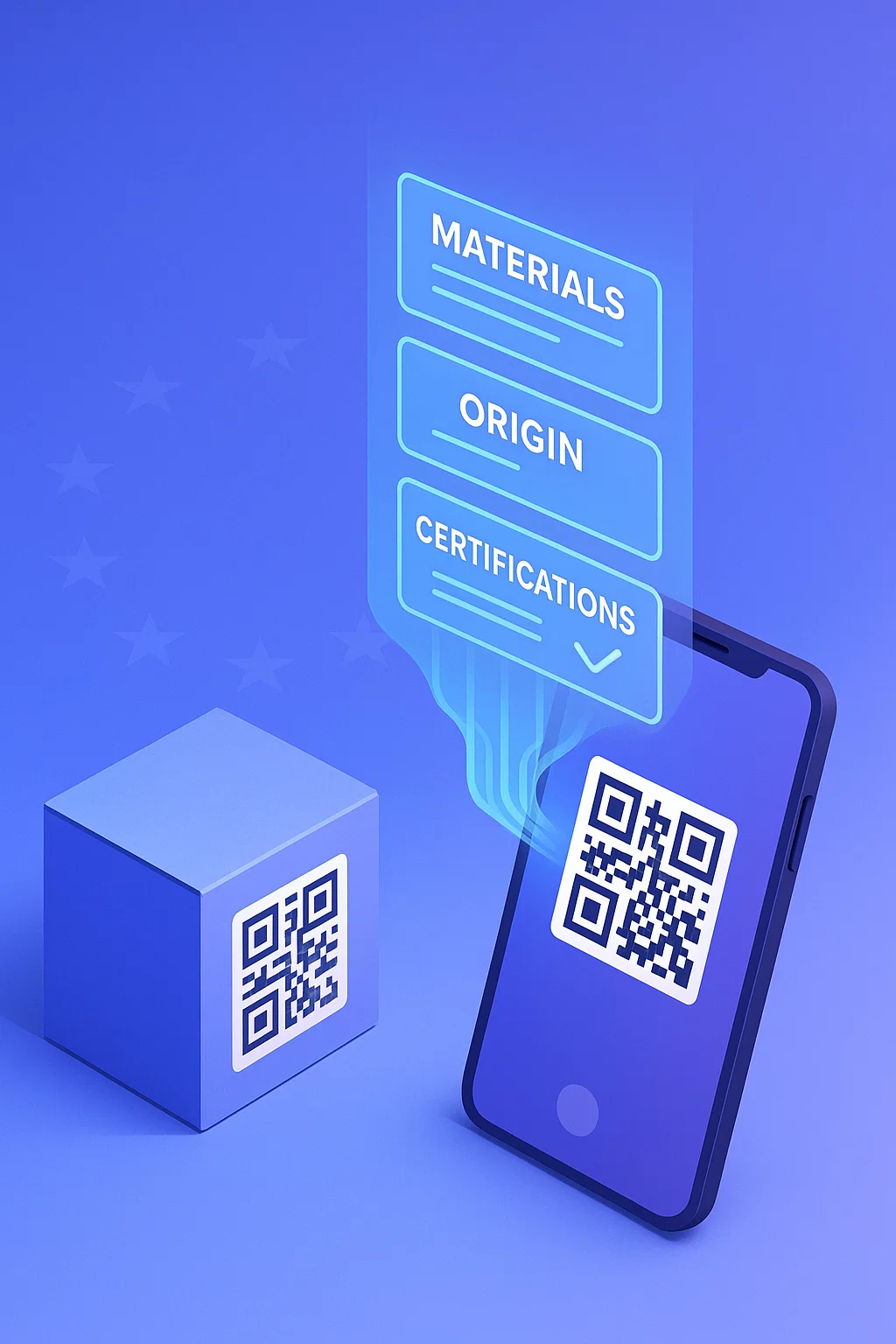
A Digital Product Passport is a structured, digital record that provides key information about a product and its lifecycle. It is intended to be accessible via a unique identifier (e.g., data carrier on the product or packaging) and to enable data exchange among authorised stakeholders.
Typical Data in a DPP (to be defined per product group)
The precise data model is set by the relevant delegated act. In practice, DPPs commonly include:
1. Identification
- Unique product identifiers (e.g., GTIN, serial or batch)
- Manufacturer and brand information
- Model/variant and production details
2. Composition and Substances
- Material composition and recycled content (where applicable)
- Information on substances of concern as required
- Origin/sourcing where mandated
3. Environmental and Circularity Information
- Relevant environmental metrics specified by the act (e.g., LCA-based indicators)
- Durability, repairability, upgradeability instructions where required
- End-of-life handling, disassembly, and recyclability information
4. Supply Chain and Compliance
- Traceability elements and documentation required for market surveillance
- Certifications and conformity information mandated by the act
- Access control to protect confidential business information
Who must comply?
Manufacturers, authorised representatives, and importers placing products on the EU market will have obligations defined in the delegated act for their product group. Distributors and online marketplaces also have roles in ensuring only compliant products are made available.
Timelines and Delegated Acts
ESPR sets the legal framework. Specific requirements, data elements, and dates apply when the delegated act for a product group is adopted. Acts typically provide a transition period. Organisations should monitor the acts relevant to their portfolio and plan accordingly.
Note: Do not assume that data requirements are identical across all categories. Rely on the text of the delegated act for your products.
Key Requirements for DPPs
Technical and Access Principles
- Use of a standardised, machine-readable data model defined by the act
- Retrieval via a unique identifier (e.g., QR, digital link, RFID) on product or packaging
- Role-based access where certain data is restricted to authorised stakeholders
- Data quality, versioning, and auditability appropriate to the act
Data Governance
- Accuracy and completeness against the mandatory fields
- Updates when specifications change
- Retention/availability for the periods required
- GDPR and trade secret protection where applicable
How to Prepare (Practical Steps)
1) Assess your data
- List systems holding product data (ERP, PLM, LCA tools, quality, logistics)
- Map existing fields to likely DPP elements and identify gaps
- Review supplier data availability and contractual obligations
2) Establish collection processes
- Define internal ownership for each data element
- Set up supplier data exchange (templates, portals, or APIs)
- Align environmental data (e.g., LCA metrics) with reporting needs
3) Choose enabling technology
- Use platforms that can model DPP schemas and evolve with delegated acts
- Integrate via APIs/connectors or secure batch processes
- Support access control and audit trails
4) Pilot, then scale
- Start with a limited set of products representative of your portfolio
- Validate data quality, access flows, and labels/identifiers
- Iterate processes and roll out progressively
Common Challenges
Limited visibility across tiers
Approach: Collect data stepwise, starting with direct suppliers; use collaboration tooling and clear templates.
Data quality and ownership
Approach: Define ownership, validation rules, and change control; improve over time rather than delaying start.
Legacy systems and integration
Approach: Prioritise critical sources first; avoid big-bang integration; add systems gradually.
Benefits beyond compliance
- Clearer product data to support circularity initiatives and sustainability reporting
- Improved supplier collaboration and risk management
- Operational efficiency through a single source of truth
- More consistent market access where DPP is required
How Lynx can help
Lynx provides a traceability and documentation platform that supports DPP creation in line with delegated acts as they are adopted. We focus on:
- Modeling product- and material-level passports where required
- Integrating with ERP/PLM/MES to reduce manual work
- Tiered supplier data collection with clear roles and access
- Dashboards and LCA integration to support circularity and sustainability reporting
- Governance: versioning, audit trails, and access control
Contact us to discuss your product categories and the delegated acts that apply to them.
Conclusion
ESPR sets a long-term direction; delegated acts define the details. Companies that begin with data readiness, modest pilots, and fit-for-purpose tooling will be better placed to comply without unnecessary complexity—and will gain clearer visibility for circularity and sustainability reporting along the way.